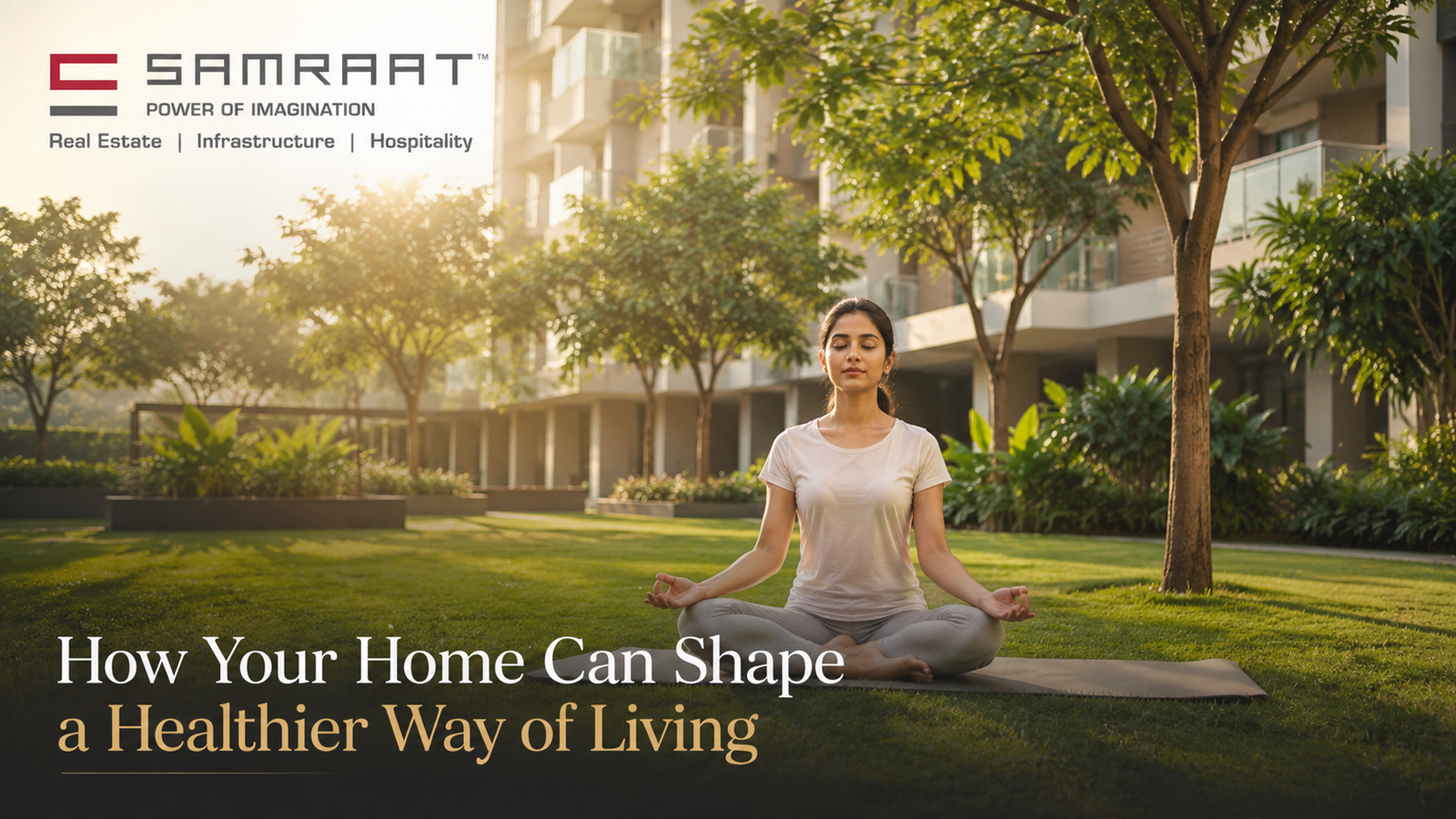
How Your Home Can Shape a Healthier Way of Living
The design choices in your home — light, ventilation, green space, and community — affect your health more directly than most people realise.
We talk about a home's square footage, its views, and its amenity list. We rarely talk about how the home itself — the orientation of rooms, the presence of green space, the quality of air moving through it — shapes the health of the people living inside. That connection is more direct than most buyers realise when they are standing in a show flat.
Natural light is not a luxury, it's a health variable
Homes with east and west-facing living spaces receive more natural light through the day. That light regulates sleep cycles, affects mood, and reduces the hours residents spend in artificial lighting. When you visit a flat, check where the sunlight falls at different times — not just during a midday sales visit. A dark living room in a well-amenitised project still means years of suboptimal light for the people living there.
Ventilation matters more than air conditioning
Cross-ventilation — where air can move through a flat from one side to another — reduces indoor humidity, limits mould risk, and lowers dependence on air conditioning. In Nashik's climate, a home with good cross-ventilation is meaningfully more comfortable for more months of the year than one that seals itself and runs AC. Check if the kitchen has an external window. Check if the bedrooms are on opposite sides of the flat from the living area. These are structural facts that no renovation can change later.
“A home that breathes well costs less to live in and more to leave behind.”
Green space is infrastructure, not decoration
- Access to green space within a residential community is linked to reduced stress and increased physical activity
- Tree cover around a building lowers ambient temperatures in summer by several degrees
- Children with access to outdoor play within their compound are more physically active across the week
- Residents of green-integrated communities report higher satisfaction over time compared to those in purely built-out developments
These are not soft benefits. They are measurable differences in how people feel and function over years of living in a home. When a developer designs a community around green space — rather than maximising FSI and leaving the landscaping for last — the people who buy there are the ones who feel it most, long after the launch event is forgotten.
Written by
Samraat Editorial Team